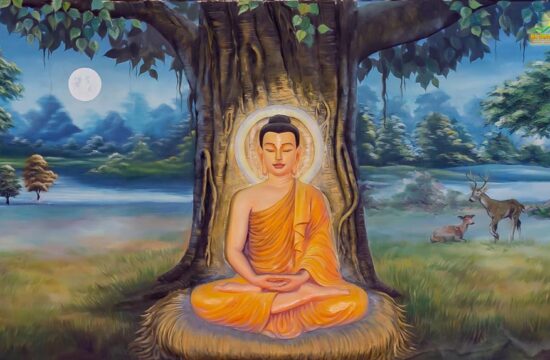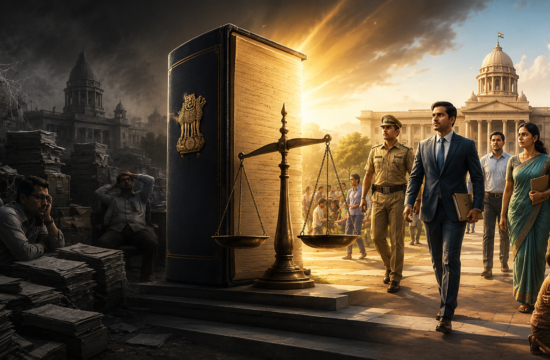
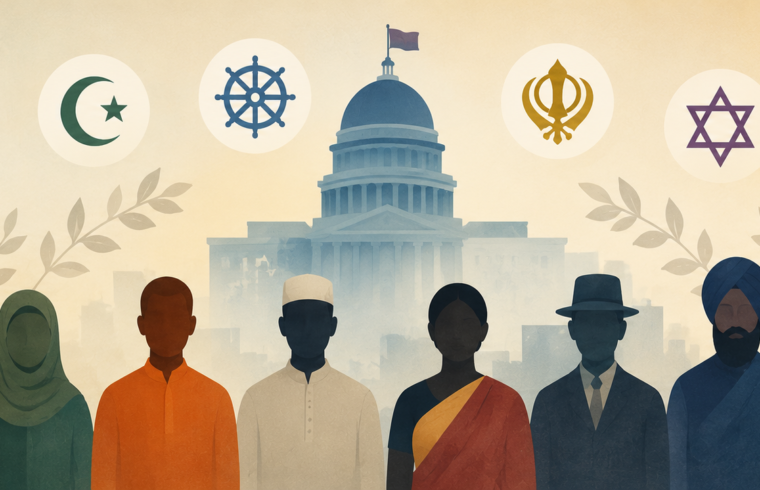
Sri Lanka is not a fully secular state. The Constitution of 1978 (as amended) contains a deliberate tension:
Article 9 gives Buddhism the “foremost place” and imposes a duty on the state to “protect and foster the Buddha Sasana.” At the same time, Article 10 guarantees freedom of thought, conscience and religion to all persons, and Article 14(1)(e) guarantees every citizen the freedom to manifest their religion or belief in worship, observance, practice and teaching.
This dual structure — a state-favoured religion alongside formal guarantees of religious freedom — is the root of most political and legal friction.
1. Do Liberals Demanding Secularism Have a Legal Case?
Politically: Yes, a coherent one. Liberals and minority advocacy groups argue that Article 9 structurally disadvantages non-Buddhist communities by embedding a religious preference directly into the supreme law. They contend that a genuinely pluralist democracy — which Sri Lanka nominally is — should not constitutionally elevate one faith.
Legally: The argument is harder, because Article 9 is part of the constitution itself, not subordinate legislation. To challenge it you would need a two-thirds parliamentary majority plus a national referendum under Article 83, since it touches a fundamental constitutional provision. No minority group can strike it down through litigation alone. The Supreme Court has consistently treated Article 9 as valid and has interpreted it alongside (not against) Articles 10 and 14.
The liberal/secularist position draws support from international law — specifically Article 18 of the ICCPR (to which Sri Lanka is a party) and General Comment 22, which require that states not favour one religion institutionally in ways that coerce or disadvantage others. The UN Human Rights Committee has noted concerns about Sri Lanka’s constitutional structure in periodic reviews.
Does Sri Lanka benefit from a secular state? Many constitutional scholars argue yes — particularly given that the country fought a 26-year civil war with overlapping ethnic and religious dimensions. A neutral constitutional framework could reduce the perception that the state is an instrument of the Sinhalese Buddhist majority.
2. The Ministry of Buddhist Affairs
Sri Lanka maintains a Ministry of Buddhasasana (Buddhist Affairs). There is no equivalent Ministry for Hindu, Muslim, or Christian affairs with comparable resources or constitutional backing.
Legal position: This does not technically violate Articles 10 or 14 because those articles protect individual freedom, not institutional parity. Courts have not struck down the ministry.
Political reality: Tamil Hindu and Muslim communities consistently raise this as evidence of institutional bias. The concern is not merely symbolic — the ministry allocates state funds, coordinates religious education policy, and interfaces with the powerful Mahanayaka (senior Buddhist clergy), who wield significant political influence. Christian groups (particularly evangelical denominations) have also faced indirect pressure through this structure, with reports of the ministry being used to legitimise opposition to non-Buddhist religious activity.
3. Government Funding for Buddhism
The state provides funding to Buddhist temples (viharas), Buddhist education, and the Pirivena (monastic educational institutions). Non-Buddhist institutions receive far less, and in many cases nothing comparable.
Legal argument for minorities: This arguably breaches the equality guarantee under Article 12(1) — equal protection of the law — when applied to the distribution of public funds. If state money flows disproportionately to one religion, citizens of other faiths are effectively subsidising a religion not their own, a principle that has been challenged in many comparative jurisdictions (notably India under Article 27, which explicitly prohibits compelling anyone to pay taxes for the promotion of any religion).
Sri Lanka has no equivalent of India’s Article 27, which makes a legal challenge here considerably more difficult. Courts have generally deferred to parliament on resource allocation questions framed as policy rather than rights violations.
Political discomfort: Very real. Muslim and Tamil communities in particular view unequal religious funding as one of several signals that the state regards them as second-class citizens. This sentiment intensified after the Easter Sunday attacks of 2019, when the subsequent political environment produced further pressure on Muslim communities specifically.
4. Poya Holidays
Sri Lanka observes Poya (full moon) days as public holidays — one per month, tied to the Buddhist lunar calendar. This is unique globally. Non-Buddhist communities observe these holidays too, but do not share the religious significance.
Legal dimension: There is no enforceable legal right for other communities to have their religious festivals declared equivalent national public holidays. Festivals such as Eid al-Fitr, Deepavali, and Thai Pongal are gazetted holidays, but the systematic monthly cadence of Poya — 12 guaranteed days per year — has no parallel for any other faith.
Political dimension: This is less inflammatory than the funding or ministry questions, but it represents a structural embedding of Buddhist religious observance into civic and commercial life. Courts in comparative jurisdictions (such as the European Court of Human Rights in cases involving Christian-majority state holidays) have generally permitted state religious holidays provided they do not compel religious observance — merely observing a day off does not violate freedom of religion of others.
5. Archaeological Sites and Religious Conflict
This is arguably the most practically explosive issue currently. Several disputes have arisen over sites — particularly in the Northern and Eastern provinces — where Buddhist archaeological claims overlap with Hindu temples or Muslim mosques.
Key examples and legal dynamics:
The Kuragala/Jahingira site in Balangoda is a prominent case — a location venerated by Muslims as a Sufi shrine, over which Buddhist monks have asserted archaeological and religious claims, backed by the Central Cultural Commission, a state body. The legal mechanism used is the Antiquities Ordinance and subsequent legislation, which gives the state wide powers to designate and control archaeological sites. Critics argue these powers have been selectively deployed in favour of Buddhist heritage claims.
In the North and East, there are documented instances of Buddhist structures being constructed at or near sites held sacred by Tamil Hindus, sometimes with state or military facilitation — particularly in the immediate post-war period after 2009. The Archaeological Department, whose senior officials have historically been predominantly Sinhalese Buddhist, has faced accusations of institutional bias in how it asserts jurisdiction.
Legal remedies available to minorities are limited. Fundamental rights petitions to the Supreme Court under Article 126 have been filed in some site disputes, but the court’s record on granting relief against state-backed Buddhist heritage claims is inconsistent.
Summary Assessment
| Issue | Legal Strength of Minority Complaint | Political Sensitivity |
| Constitutional secularism demand | Moderate (requires referendum) | High |
| Ministry of Buddhist Affairs | Low–Moderate | Moderate |
| State funding for Buddhism | Moderate (Article 12 equality) | High |
| Poya holidays | Low | Low–Moderate |
| Archaeological site conflicts | Moderate–High | Very High |
The honest legal answer is that Sri Lanka’s constitution by design creates a hierarchy in which Buddhism holds a privileged position, and most legal challenges to that hierarchy face the insurmountable barrier that the hierarchy is itself constitutionally entrenched. The political answer is that this arrangement — whatever its historical justification — continues to generate legitimate grievances among Tamil Hindu, Muslim, and Christian communities, and that international human rights law provides a normative framework for reform even where domestic law does not yet compel it.
Dr. Intikab Idiris